EU Food-Contact Compliance
All mold materials, lubricants and surface treatments were selected for EU 1935/2004 food-contact compliance. Full material traceability documentation was provided for every mold component touching the plastic melt.
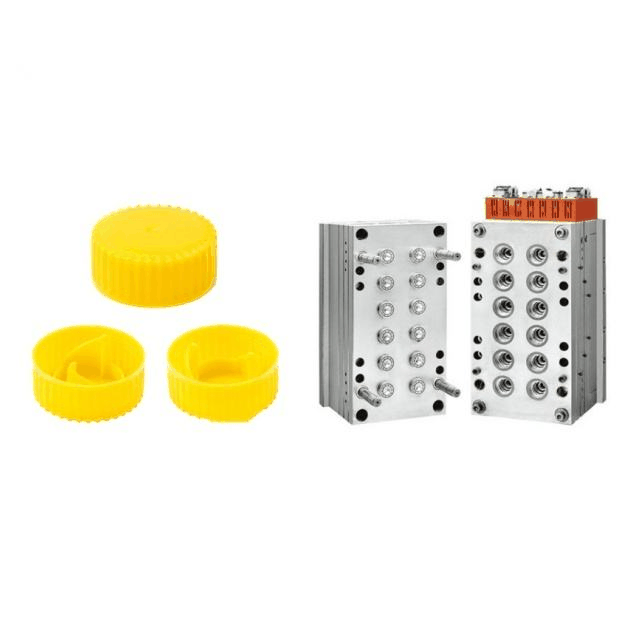
A German packaging manufacturer ordered high-cavitation injection molds for mineral water bottle caps. The project demanded tight dimensional tolerances, fast cycle times and compliance with EU food-contact material standards.
A German packaging manufacturer serving the European mineral water industry needed precision injection molds for 28mm PCO neck bottle caps. Key requirements included sub-8-second cycle times, consistent tamper-evident band formation, precise thread dimensions and full EU food-contact material traceability.
Shengqi engineered an 8-cavity cold runner mold with mechanical unscrewing, integrated tamper band slitting, balanced runner system and optimized cooling for high-speed production. All mold components contacting the plastic melt used food-grade-compliant steel grades with full material certification.
The client's engineering team visited Shengqi's factory for the mold trial and sample approval. Cap samples were tested on the client's capping equipment in Germany and passed all torque, seal integrity and tamper band performance requirements.
All mold materials, lubricants and surface treatments were selected for EU 1935/2004 food-contact compliance. Full material traceability documentation was provided for every mold component touching the plastic melt.
The mold achieved consistent sub-8-second cycles through optimized cooling channel design, balanced runner sizing, efficient unscrewing mechanism timing and precision mold alignment for fast, reliable ejection.
Tamper-evident band slitting required precise blade alignment and consistent slit geometry across all 8 cavities. The slitting mechanism was designed for easy blade replacement and adjustment during production.
The German client visited Shengqi for the mold trial, bringing their own resin and testing equipment. Cap samples were measured, torque-tested and capping-trialed on-site before mold approval and shipment.