Plastic Trash Can Injection Mold
Large injection mold for household and outdoor plastic trash cans, supporting durable product design and stable production.
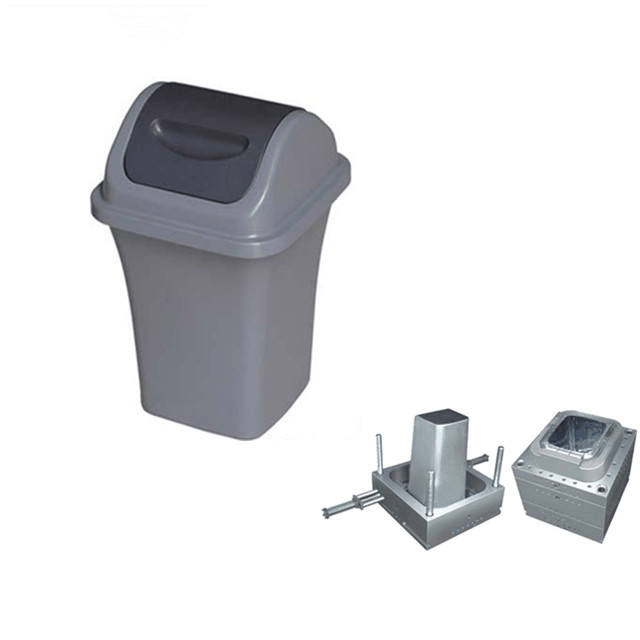
Mold Project Notes
- Trash can molds involve large part volumes, structural ribs and handles, requiring strong mold design and reliable demolding.
- Engineering review covers part size, wall thickness, stacking feature, handle structure and molding cycle planning.
- Suitable for kitchen bins, outdoor waste containers and commercial trash can mold projects.
Process and Material
- Application: trash can body
- Process: injection molding
- Material: PP / HDPE
- Part size: large
What this mold project needs to solve
Plastic trash cans range from small kitchen bins to large outdoor containers. The mold needs to handle deep draw parts, structural handles, hinge points for lids and stacking features while maintaining stable production.
Shengqi reviews the product design for wall thickness consistency, draft angles for deep cores, handle strength, bottom reinforcement and any lid or wheel assembly interfaces.
For outdoor trash cans, UV resistance and impact strength requirements may affect material choice and mold design decisions.
Key points reviewed before tooling
Deep Draw Molding
Tall trash can bodies require careful core cooling, draft angle planning and ejection force distribution to avoid part sticking or deformation during demolding.
Handle and Hinge Design
Integrated handles, lid hinges and wheel mounting points need structural reinforcement. Rib design and wall thickness at these areas are reviewed before tooling.
Stacking Feature Control
Many trash cans have stacking or nesting features. Mold precision at these interfaces affects product usability and storage efficiency.
Production Cost Efficiency
Material weight, cycle time and cavity layout directly affect part cost. Shengqi reviews these factors with the customer to balance tooling investment and production economics.
Information required for mold structure review
- Product drawing with overall dimensions and volume
- Material preference and any UV/outdoor requirements
- Lid, handle, wheel assembly details if applicable
- Expected annual quantity and target part weight
- Stacking, packaging or labeling requirements
Available Project Images